Fully automated bots
Software that sits at the table and makes every decision on its own, usually built on solver-style strategy. It can play for hours without tiring or tilting.

Yes, and every big poker room fights them. Here is how poker bots work, how sites catch them, and why a physical deck, a live dealer and identity checks on every player keep them off RAIZE tables.
A poker bot is software that plays, or helps someone play, without the player doing the thinking. It comes in three main forms.
Software that sits at the table and makes every decision on its own, usually built on solver-style strategy. It can play for hours without tiring or tilting.
A human clicks the buttons while software suggests each play. Often called RTA, it is harder to spot than a bot because the account belongs to a real person.
One operator running many accounts at once, sometimes at the same table. Shared information between seats turns a fair game into a rigged one.
No single check catches everything, so large online rooms layer several. These are the most common.
Security teams look for patterns humans rarely produce: identical decision times, sessions with no breaks, and play that never changes when a person would be tired.
Reviewers compare an account's decisions against solver output and against the players it sits with most, which can expose both bots and colluding accounts.
Downloadable poker clients can scan for known prohibited programs running on the same device while you play.
Verifying who owns each account makes it harder for one person to run several seats, and gives the room someone to hold responsible.
Most online poker deals cards with a random number generator. In regulated rooms those RNGs are tested by independent labs, and a fair RNG is not rigged. The problem is trust: you never see the deck, so every bad beat invites the question.
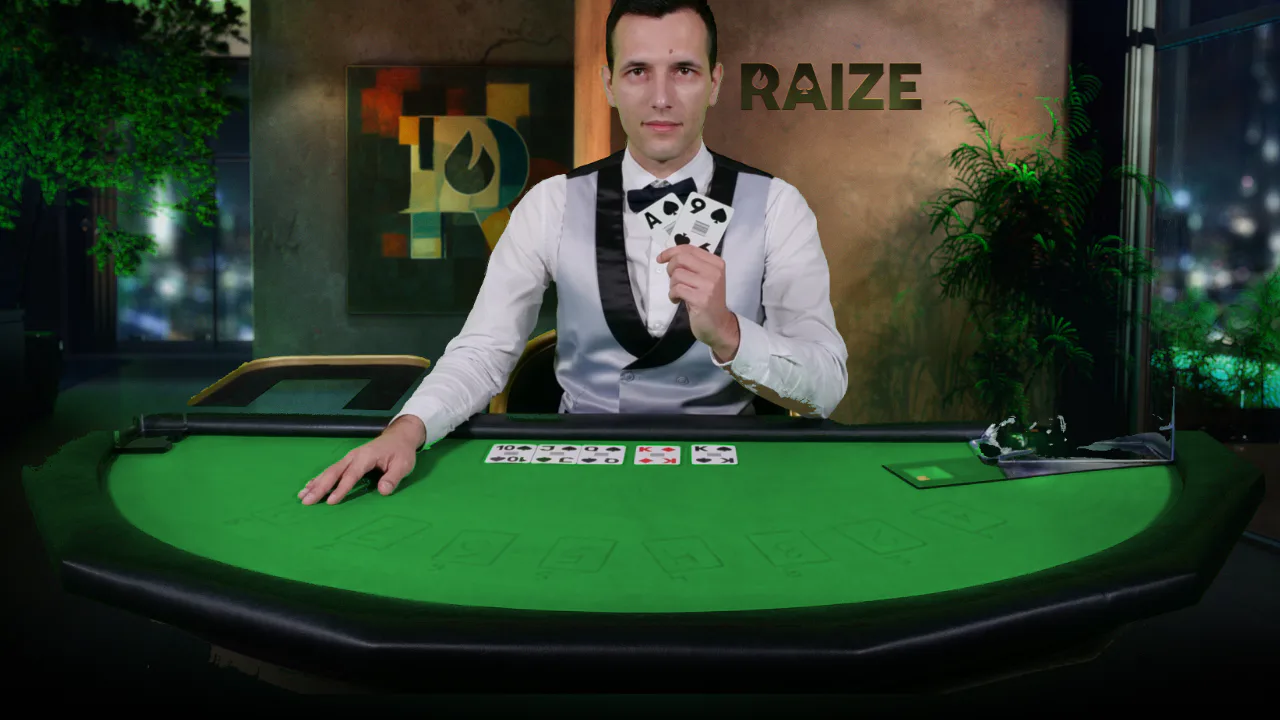
A live-dealer table removes that question. On RAIZE a person shuffles and deals a physical deck on camera, and you watch every card come off it.
Live dealing fixes the deck. RAIZE's player checks go after the seats.
Every card on RAIZE is dealt by a human dealer from a real deck, streamed from a GLI-certified studio. There is no RNG to doubt.
Every player passes a live identity check before they sit, so multi-accounting and stand-ins are caught on join, not after.
Any player can turn on a camera at their seat to see and be seen. It is your call, on every seat.
Every seat is location-verified, so the players beside you are really where they say they are.
Hold'em, PLO-4 and PLO-5, dealt live around the clock. New to Omaha? Start with how to play pot-limit Omaha.
Bots exist, and major online rooms ban accounts for using them. Most large sites run security teams that look for automated play, real-time assistance and multi-accounting.
Through timing and behaviour analysis, hand-history review, security checks in the poker client and identity verification. Live-dealer rooms such as RAIZE add a physical deck on camera and liveness and facial checks when players join.
Regulated RNG poker uses random number generators tested by independent labs, but you have to trust software you cannot see. On RAIZE there is no RNG: a human dealer deals a physical deck on camera in a GLI-certified studio.
The dealing is human, but the players still act online. That is why RAIZE runs liveness and facial checks on join, verifies seat locations and offers optional player-cams on every seat.
RTA stands for real-time assistance: software that tells a human player what to do during a hand. It is banned on major poker sites and is harder to detect than a fully automated bot.
No. Every card on RAIZE comes from a physical deck dealt by a real dealer on camera. Independent lab GLI certifies the studio and the shuffle.
Live dealers, verified players, crypto in and out. Join the first certified live-dealer poker network.