Blinds
The two players left of the button post the small and big blind. On RAIZE's smallest PLO-4 table that is $0.10 and $0.25.
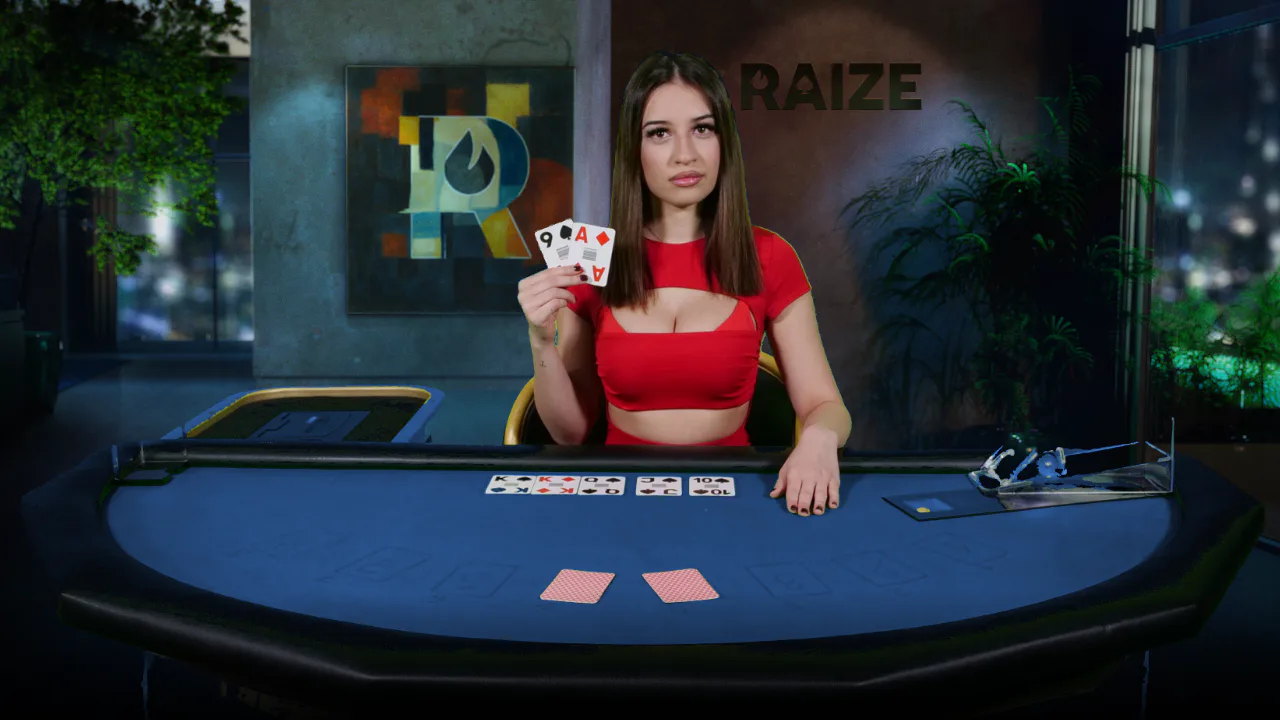
Pot-limit Omaha (PLO) is poker's second most popular game: four hole cards, a five-card board and bets capped at the size of the pot. Here are the rules, the betting and the mistakes to avoid, then a live table to try it on.
Omaha uses the same deck, the same five-card board, the same betting rounds and the same hand rankings as Texas Hold'em. The difference is in your hand: four hole cards instead of two, and a strict rule that you play exactly two of them.
More cards means more possible hands for everyone, so draws are bigger and the hand that wins at showdown is usually stronger. That is also why Omaha is almost always played pot-limit: it keeps the betting in proportion to the pot.
A hand of PLO follows the same order as Hold'em, from blinds to showdown.
The two players left of the button post the small and big blind. On RAIZE's smallest PLO-4 table that is $0.10 and $0.25.
Every player gets four hole cards, face down. Pre-flop action starts with the player left of the big blind.
Three community cards on the flop, then one on the turn and one on the river, with a betting round after each. No bet can be larger than the pot.
Players make their best five-card hand from exactly two hole cards and exactly three board cards. The best hand wins the pot.
Omaha uses standard poker hand rankings, from best to worst. Because everyone holds four cards, straights, flushes and full houses come up much more often than in Hold'em.
The two-card rule is where most new Omaha players go wrong. Ringed cards make the best hand; faded cards do not play.
In Hold'em the ace of hearts plus four hearts on the board makes an ace-high flush. In Omaha you need two hearts in your hand, and nothing else connects, so this is ace high.
Only two of your queens can play, so the third one is dead. Holding three of a kind in your hand is one of the weakest starts in Omaha.
The jack and ten join 9-8-7 on the board. Your pair of fives does not play: with exactly two hole cards allowed, you choose the two that make the best hand.
The most you can raise is the size of the pot after you call. Work out the call first, add it to the pot, and that total is your maximum raise on top of the call.
The minimum bet is the big blind, and a raise must be at least as large as the previous bet or raise in that round. Everything in between is up to you.
Four habits that separate winning Omaha players from Hold'em players trying Omaha.
The best Omaha starting hands are connected and suited, ideally double-suited, so all four cards help each other. Four random high cards are weaker than they look.
Even a premium hand such as double-suited aces is far from a lock against a random hand before the flop. Most of the game is decided on the flop and later streets.
With six two-card combinations per player, strong hands collide often. A flush draw without the ace of that suit can cost you a big pot.
Acting last gives you information and control over the pot size, which matters more when every raise can be pot-sized.
RAIZE deals PLO-4 and PLO-5 on real felt with real cards. Ready for a fifth hole card? Read the 5-card PLO guide.
PLO-4 stakes: $0.10/0.25 to $10/25
Find a PLO seat
In Omaha you get four hole cards instead of two, and you must use exactly two of them with exactly three board cards. Most Omaha is played pot-limit, while most Hold'em is played no-limit.
Yes. PLO usually means four-card pot-limit Omaha. RAIZE labels it PLO-4 to tell it apart from PLO-5, the five-card version.
Yes. Every Omaha hand uses exactly two hole cards and exactly three board cards. You cannot play the board, and you cannot use three or four cards from your hand.
The largest bet or raise you can make is the size of the pot after you call. At $0.10/0.25, the first player to act pre-flop can raise to at most $0.85.
RAIZE runs PLO-4 from $0.10/0.25 to $10/25 and PLO-5 from $0.25/0.50 to $25/50, dealt from a physical deck by real dealers on camera.
Live dealers, verified players, crypto in and out. Join the first certified live-dealer poker network.